
There’s this essential trifecta in any old town – city hall, church, pub. Some might add trivialities like marketplace and school to it, but the only thing I would is, surprise, a cinema. The fate of cinemas throughout Romania in the post-communist era has been mired in corruption and real-estate machinations, as the more than 800 screens run by RADEF (Autonomous Directorate for the Distribution and Exploitation of Films RomaniaFilm) withered to a handful over the last thirty years. Nowhere was this felt harder than in small towns, where the retail malls and cinema chains did not fill the void.
City
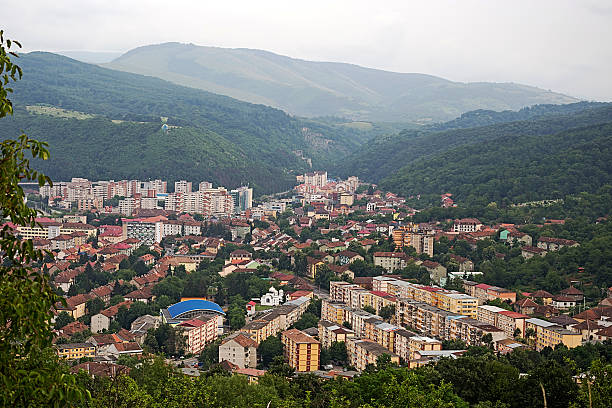
Reşiţa would be described as a city, the capital of Caraş-Severin county in South-Western Romania, but the place feels perfectly provincial. Its population has shrunk by about 30% after 1990 to something around 60,000 people, with the closure of existing industrial mining complexes and the migration of local youths the leading causes. Although placed against the backdrop of enticing hills and mountains, the area has remained underdeveloped, with just recent efforts being focused on reviving it. Driving through Reşiţa today, you have to weave through a maze of roadworks, as the whole road infrastructure is being redone with European financing. It gives you a sense that things are happening, a feeling that is strengthened when seeing the bustling city center, with hip (if somewhat generic) bars and restaurants fixturing a nicely lit, generous pedestrian area.
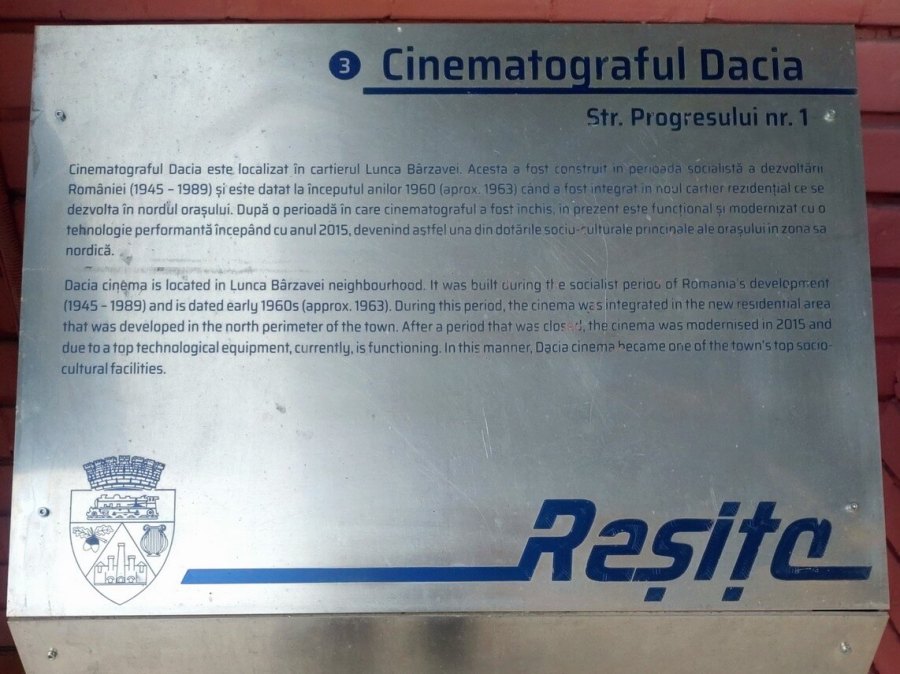
The city stretches along the Bârzava river, making for an unwieldly layout that’s atypical for most settlements. This is why you won’t find the Dacia cinema in the city center, but rather in the more commercial Lunca Bârzavei neighbourhood, close to the Transfiguration Church, the city hospital and a couple of large retailers. Built in the 1960s, the cinema was an important venue until its closure soon after the 1989 revolution, reopening more than twenty years later, in 2015. The building still oozes a communist architecture, although it is supposedly one of the structures to be renovated and redesigned using money from the PNRR (National Recovery and Resilience Plan) in the near future.
Cinema
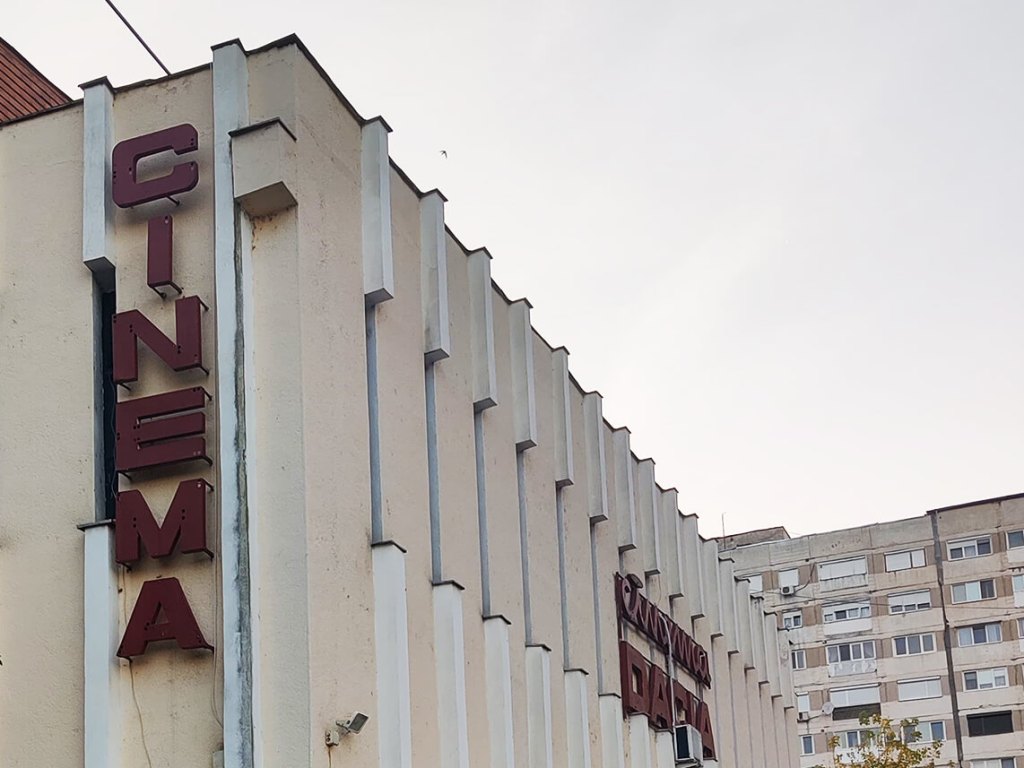
I don’t recall when I first noticed the reopened cinema. I’ve been holidaying yearly at a place called Văliug, half and hour away from Resita in the Banat mountains, a location well known for the Gozna lake, which features both relaxed hotels and energetic party places. What I do know is that it’s been on my to-visit list for a while now and when I finally arranged to drive down and check out Dacia, I expected to see a minimalistic setup equal to the mainstream movie selection it usually features. Boy, was I in for a surprise.

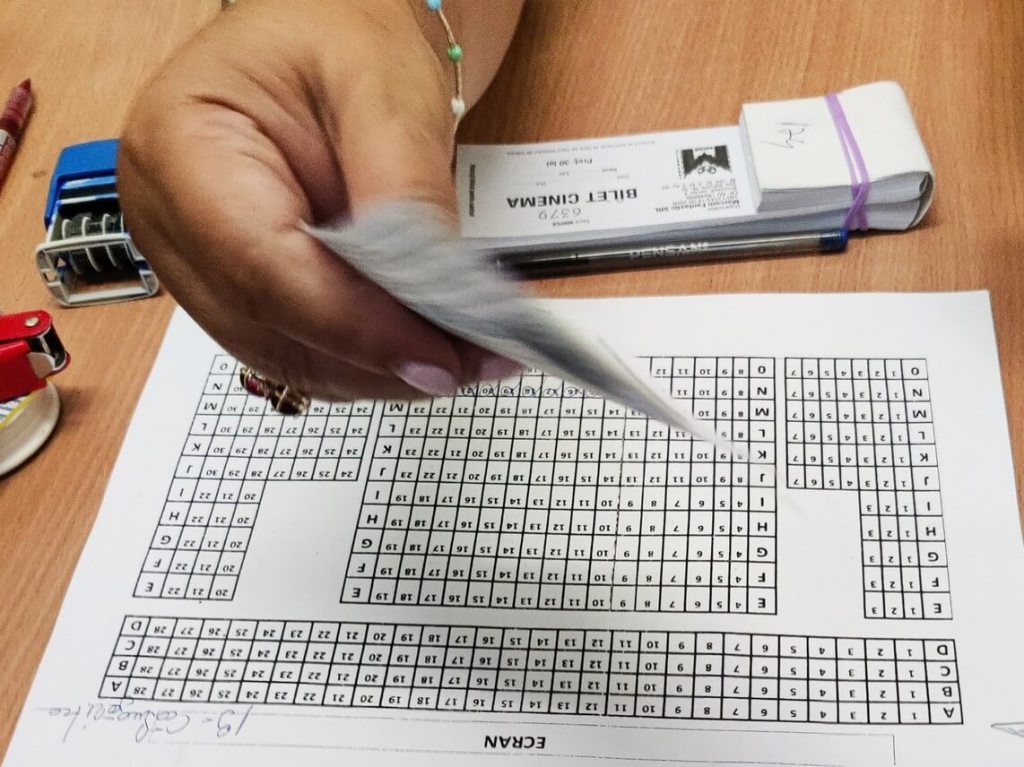
Together with a friend, we were a few minutes late to the five o’clock screening of The Nun II on a sunny Saturday. It was a toss-up between that or The Equalizer 3, but logistical considerations favoured the earlier choice. Upon buying two tickets, I was surprised to see they cost 30 RON a piece (6 EUR), a pricey proposition for a city that has a lower-income demographic profile. After loading up on popcorn (made on location) we stumbled into the dark and realized we had missed the opening scene – no trailers or ads here. Seating was bountiful, with a mere fraction of the 402 seats occupied. When the screen finally lit up with a less lugubrious scene, we slithered through the aisles and chose a couple of premium central positions – cushy for our behinds, ample arm rests with cup holder and even softened back seats for persons of the tall persuasion who get boxed in with their lanky feet.
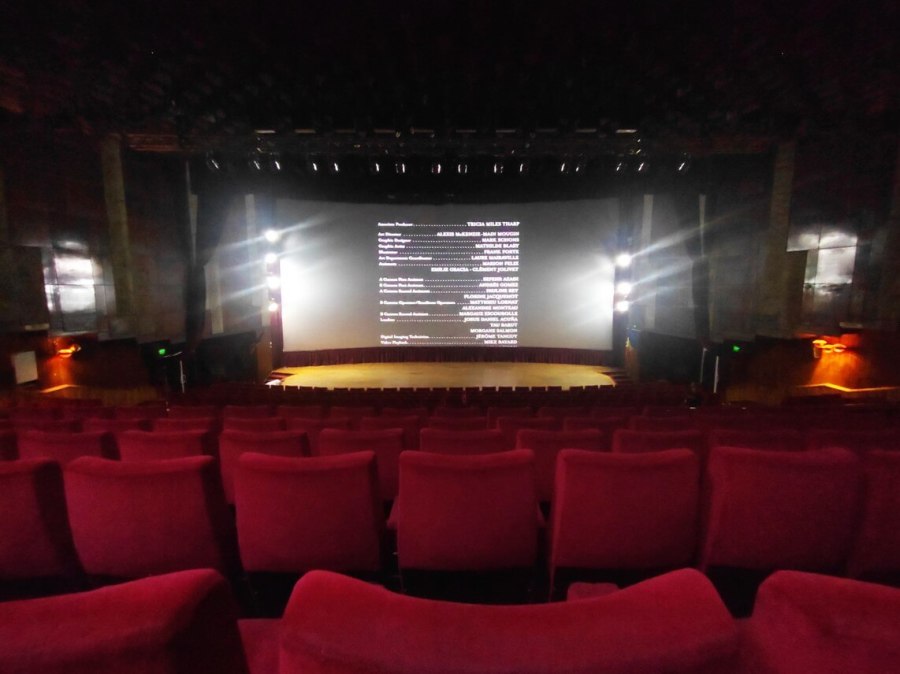
There is a large stage in front of the screen, which I intuited was used for some non-cinematic performances and has the added benefit of making most seating positions viable. As the movie progressed, it became apparent that the screen was…sizable. So sizable that it’s closer to an IMAX screen than your run-of-the-mill cinema screen. Even though the movie did not demand much of the sound system, it felt nicely attuned and well-amplified by the soundproof padding on the walls and ceiling. Even in the dim light of the screen, the white air-conditioners stood out to me on the walls, as they had done at a similar small-town cinema I had visited a few years ago in nearby Caransebeş. The connection was going to prove less haphazard than I expected.
It was a shame that the movie had little to offer to the otherwise impressive cinema experience (review here). As people started filing out at the end, I had another look around and walked to the last row to take in the sight and take some pictures. “No filming allowed here” cinema staff pointed out, so I had to reveal my motives. As luck would have it, this led to a more in-depth experience than we could have hoped for.
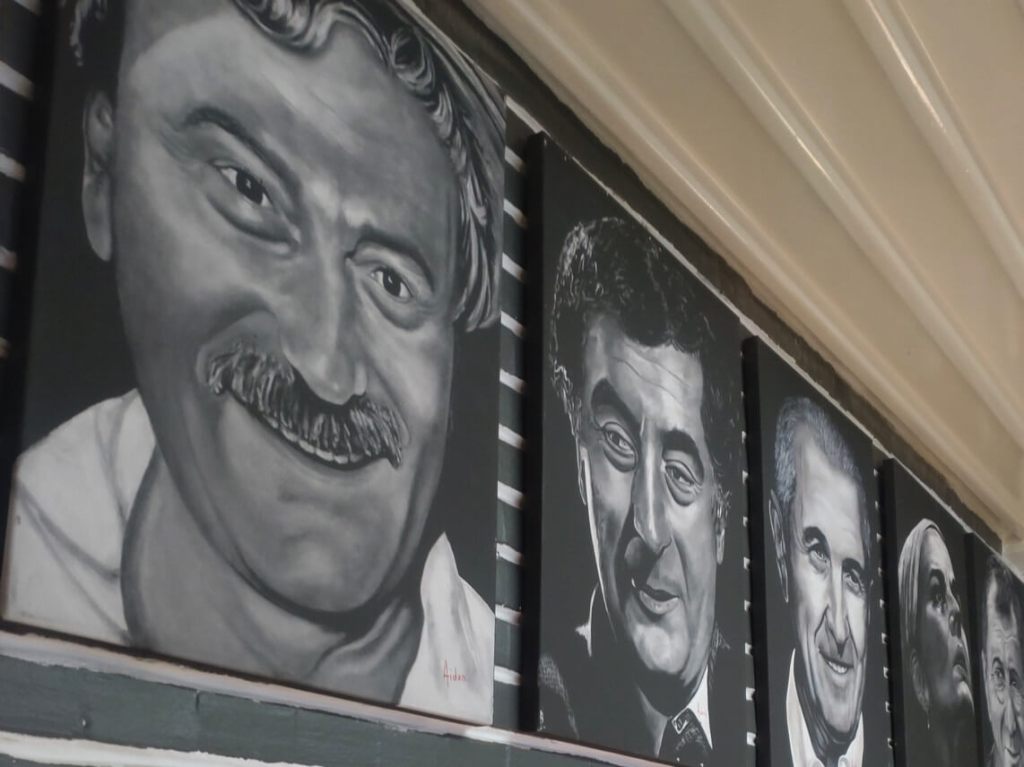
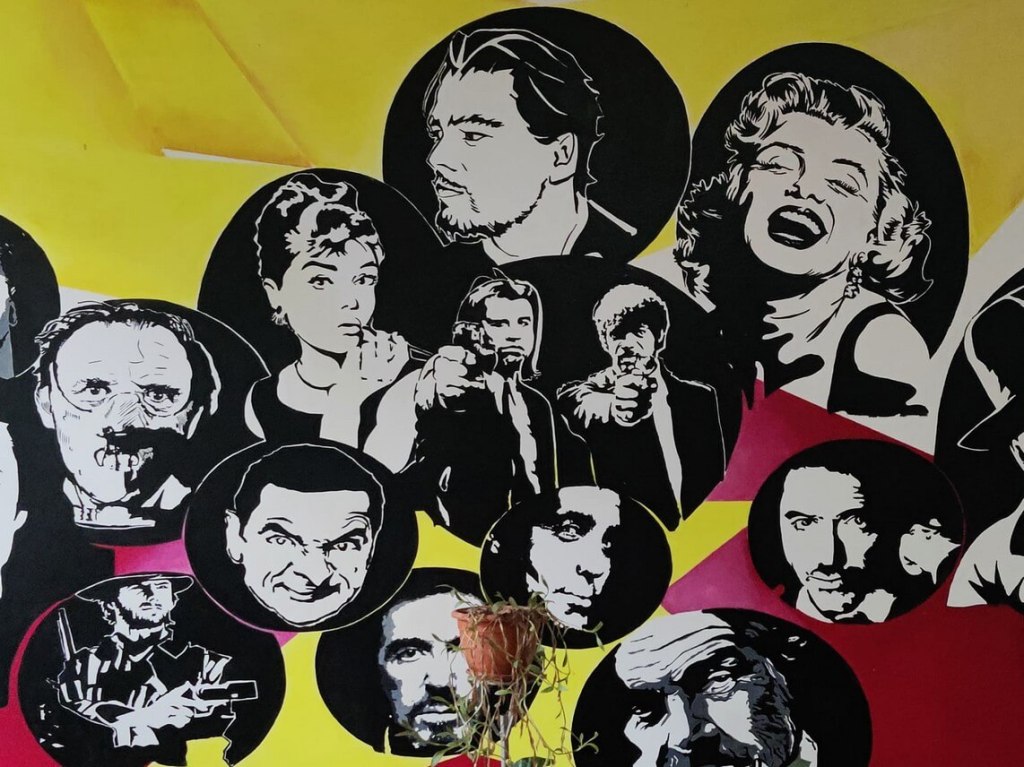
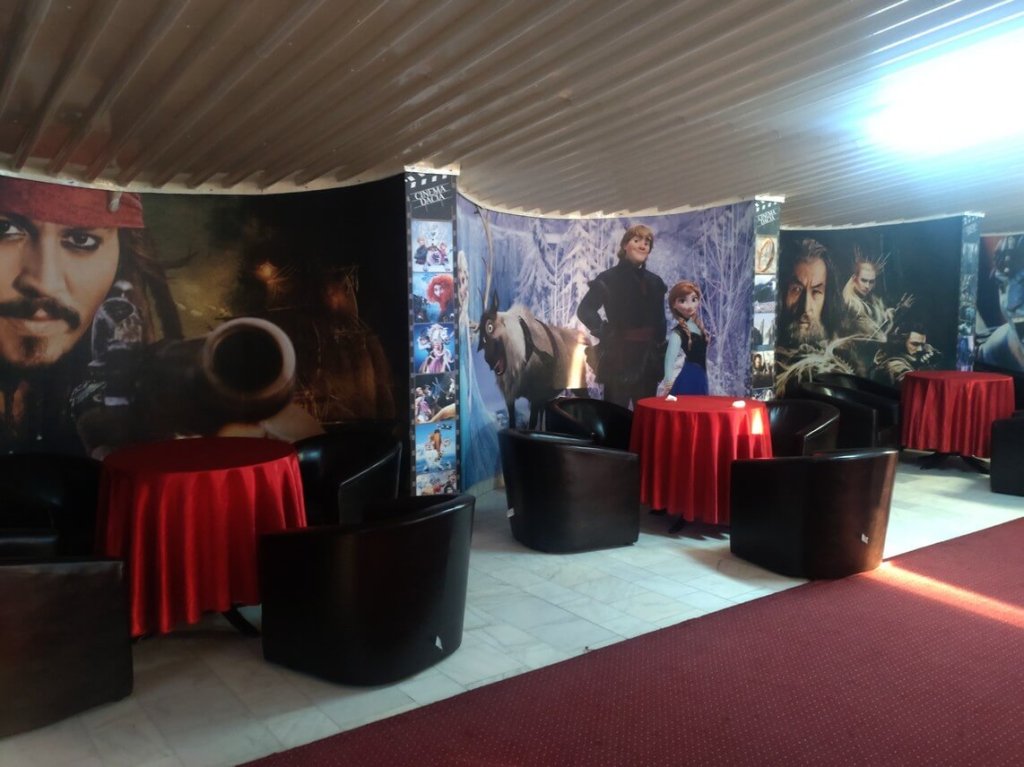
Back in the foyer, I had some time to actually notice the decor and the seating. A number of tables and chairs lined one of the walls like in a proper cinema bar, and the walls featured posters and drawings that were anything between quaint and kitschy. At one end of the building, the Bârzava Ensemble for folk dancing had its office and a trophy-filled cabinet, solving the mystery of the stage in front of the screen.
Business
We were ready to leave when the same cinema staff that had admonished me earlier suggested I had a chat with the woman selling tickets from inside a booth left of the entrance. Maria Bikfalvi, who was filling in for another staff member presently on holiday, listened to my effusive praise with subdued satisfaction and we proceeded to have a long talk about both the local cinema as well as similar venues throughout the country. Mrs. Bikfalvi has had a connection with cinemas all her life, as she spent her childhood alongside her mother, who worked various jobs at cinemas in Bucharest. She then worked for more than thirty years for RADEF herself, experiencing the dilapidation of their cinema infrastructure first-hand, before deciding to take a chance and invest in several independent cinema venues. These spread throughout Caras-Severin and Hunedoara counties and include larger towns like Caransebeş (ah-ha!) and Petroşani, but also considerably smaller places, all with former mining communities, such as Lupeni, Oţelul Roşu, Vulcan and Zărand. The Luna Cinema in Caransebeş had already impressed me (in spite of the inaesthetic air-condition units) and after checking online, some of the others also look spectacular, forcing me to append them to my to-visit list.
But how do such setups work? It’s usually the case of a partnership between local authorities and a private investor, with the former ensuring an appropriate venue and covering some utility costs, while the latter provide the cinema equipment and the day-to-day running costs. My mental arithmetic immediately told me this can’t be a lucrative business model, as just the layout is already over 100k EUR and the meagerly attended screenings can’t be a real cash boon. Mrs. Bikfalvi confirmed it and backed it up with some numbers, which highlighted how much cinemas have suffered due to the pandemic and the shift to watch-from-home using streaming platforms: Dacia had more than 65k visitors after the reinauguration, and last year it only scraped a third of that, with some improvement in 2023. The pandemic might not have single-handedly caused this crash, but it surely amplified existing causes, such as the youth-drain from Resita and the inflationary effects.
“Since the pandemic, going out to the cinema just isn’t a priority any more. We try to vary the movies we show, we have a critic in Bucharest who suggests options based on what our distributor partners offer, but it’s difficult to find an audience, particularly among young people. Without help, independent cinemas such as ours would not survive” Mrs. Bikfalvi opined. But it’s all a matter of chance, if local authorities, meaning the local mayor in the case of most small towns, are willing to offer this support or not.
Nostalgia
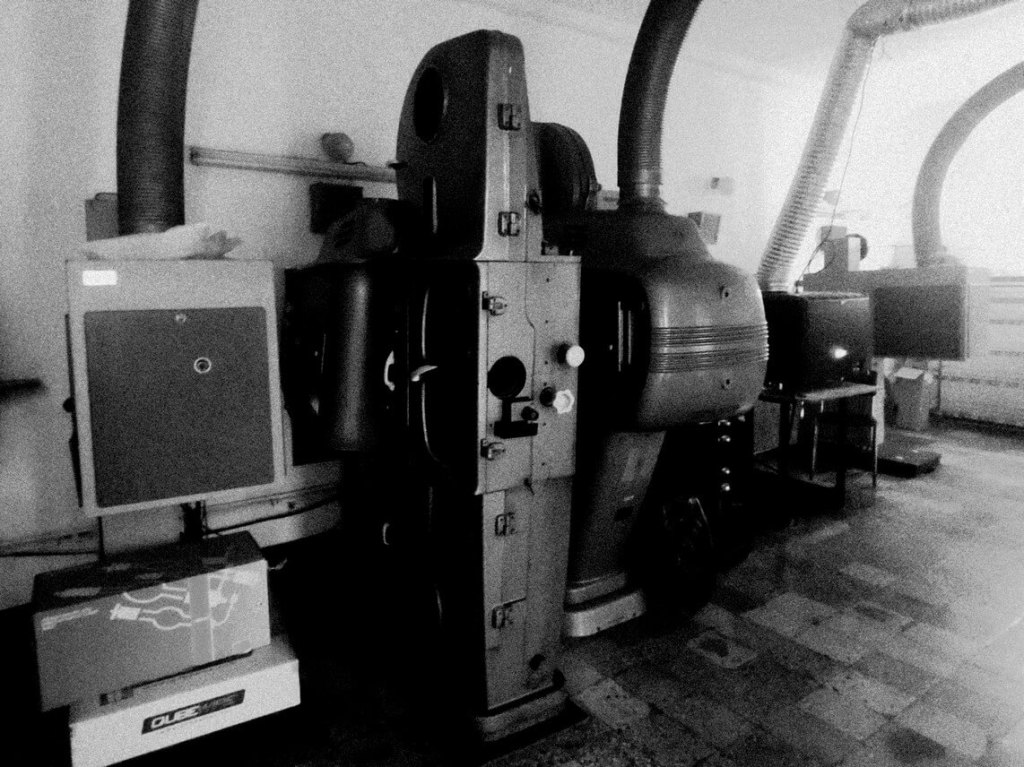
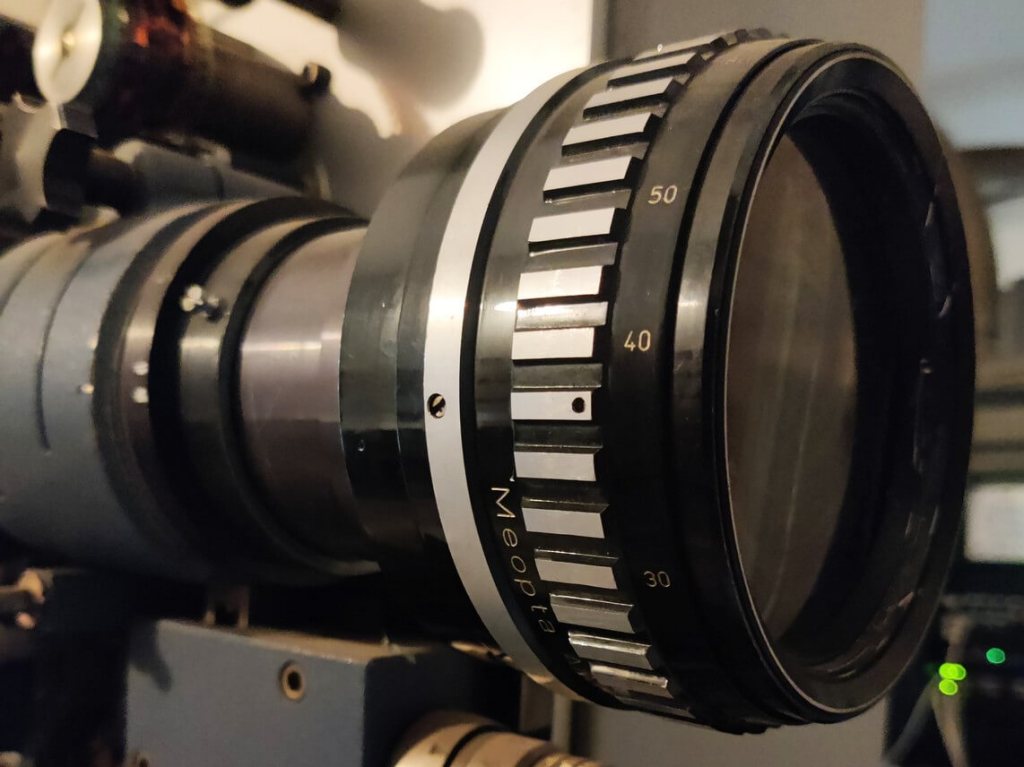
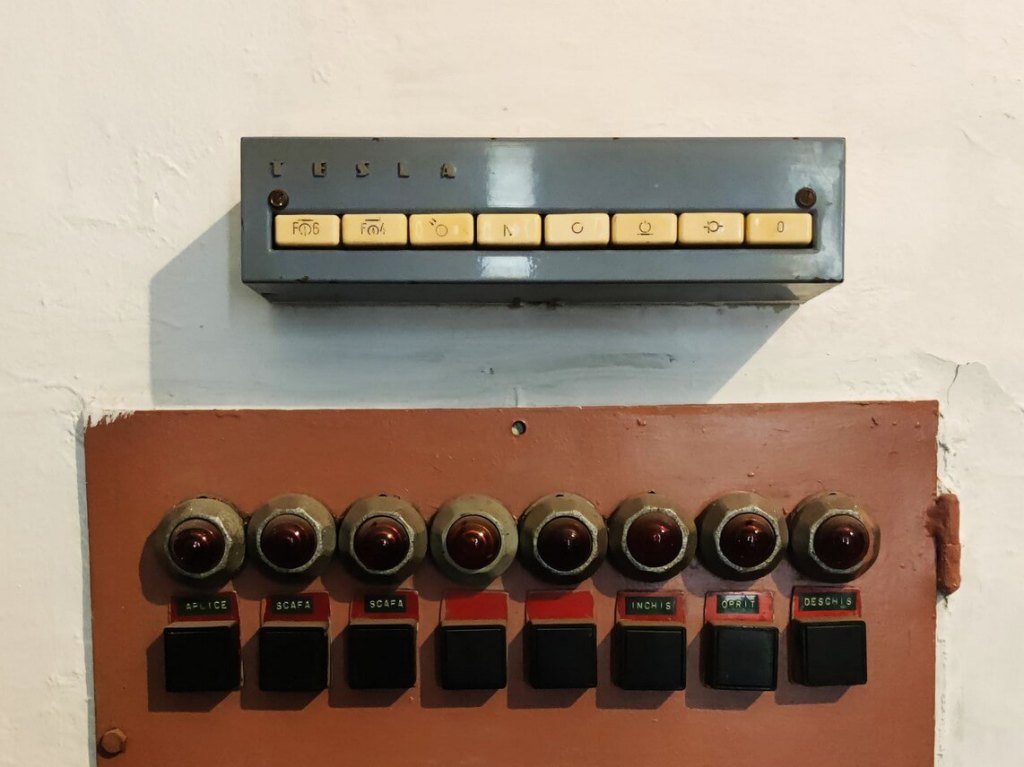
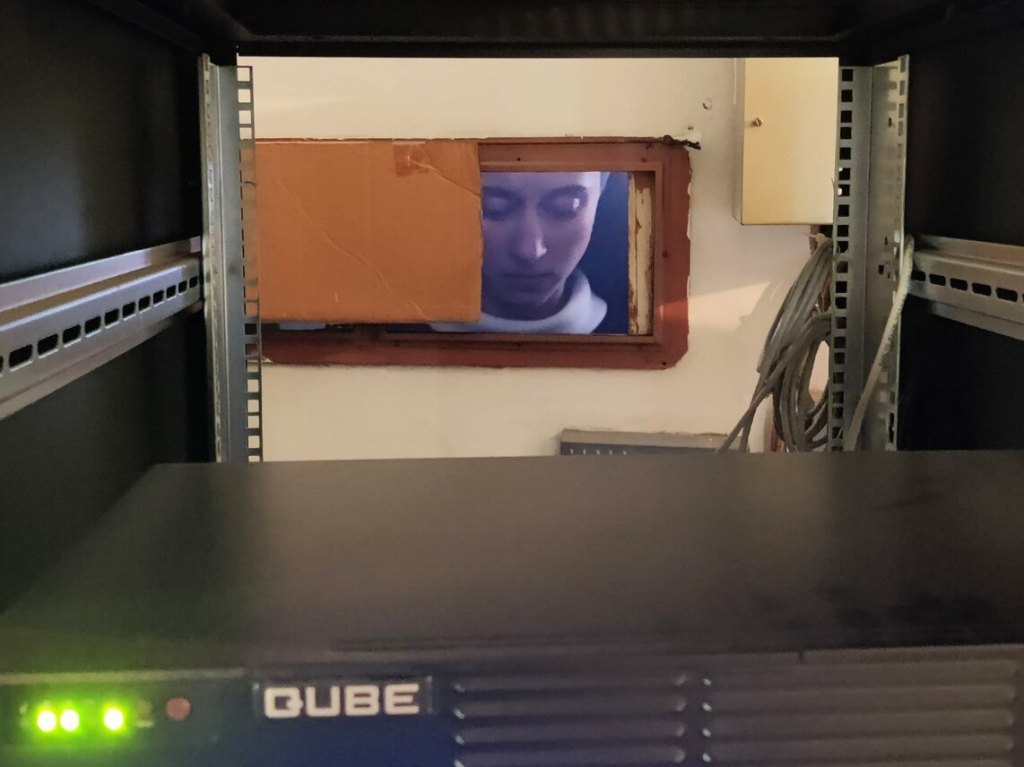
Before leaving, we had a chance to check out the projection room – and that’s where another big surprise was in store, as the old projectors were lined up around the new DLP and its server rack, including the Czechoslovakian MEOPTA UM 70/35 produced in the late 60s, an impressive beast. “We hope that after the building is renovated, they’ll find a place in the foyer, where everyone can see them” the now friendly cinema staff member accompanying us said. It would be a shame if they didn’t.

We walked away in quiet contemplation from the cinema, more than an hour after the movie had finished. The next screening was already running, with no more than tens of people attending. There’s something romantic in the struggle for survival, but it’s not fun as a perpetual state of existence. Maybe a four-hundred seater is more than Reşiţa can deal with right now, but any frequent cinemagoer knows that empty screenings are more likely to be the rule, not the exception.
So next time you drive through random Romania (or elsewhere) and have two hours to spare, why not check out a cinema you’ve never stepped in before and watch, if nothing else, that Hollywood blockbuster some guy on the unseen internet said is kinda crappy?
 tributary stu