
I’ve had this happen to me with musicians, when their passing suddenly pushes me towards a rediscovery of some of their best songs. Pretty common, isn’t it?
This is the first time, however, that it happens for a film director and it began by putting a face and a voice to a name I knew full well. This long-winded piece tracking my experience in discovering the world of William Friedkin, through his movies, his book, his interviews will hopefully show you how little I know about cinema and reveal to you the same fascinating guy I came to know in the past few weeks.
Also, I hope you like prologues.
a starting point
“When I die, they are not gonna say the guy who directed the Sonny and Cher movie just died”.
William Friedkin passed away on the 7th of August 2023, from heart failure and pneumonia. He is widely known for two seminal films of the 1970s, The French Connection (1971), which won pretty much all the big tickets at the Academy Awards the following year, and The Exorcist (1973), which probably everyone and their grandmother has witnessed. I had seen both quite a few years ago but other than that, the only Friedkin films I came across over the years were the great retread of 12 Angry Men (1997) and the interestingly-cast Killer Joe (2011) – the latter written by one of my lowkey favourites, Tracy Letts).
To further establish my ignorance, I was actually under the impression that Paul Scharder had some involvement with the original Exorcist. Instead, he had only become a part of this universe by directing a controversial prequel in the mid 2000s, from which he was fired, before his not-so-great Dominion: Prequel to the Exorcist (2005) saw the light of day a few years later.
So that was all I had going for me, not even a handful of movies, some confusion and a name. Then, for a change, social media proved a gateway to something other than…well, I wanted to write “controversy and obsession”, but that would be wrong.
him?
“The great thing I had going for me was ignorance. I had not seen the masters by the time I become a filmmaker”.
After Friedkin’s passing, my Twitter feed (erm, X) was rife with clips and quotes from the man, highlighting his irreverent and idiosyncratic manner. This was a guy to my liking I thought, a bit of an arrogant prick with many a good story to tell. And it all started with this clip, from a docu-movie between Friedkin and Nicolas Winding Refn (of Drive fame):
So I embarked on this almost-choronlogical journey of (re)watching Friedkin, reading his biography, checking out some of his director’s commentary and interviews. His biography is probably the best source on his major pictures, with stories rehashed throughout the other mediums, and boy are some of those stories crazy.
The problem is, the more I read and watched, the more I wanted to read and watch. Even when I was reading or watching the same thing said in a different forum. There’s this magnetic energy to Friedkin’s presence, he is either brash or intensely focused and always talks like a person who loves movies.
He was a character, that’s for sure, but he also made movies that were a) important b) intense and c) fun to watch. Although not always at the same time.
step by step
“I just said “let’s end the movie with a bang” and it became one of those things that people didn’t understand, but they thought it was genius because they didn’t understand it…and it meant zippo!”
I will be writing my usual short form reviews in the coming days and weeks, to the point that you will be praying to the blog gods that I get over this phase. But I appreciate you all so take this journey with me and jump in wherever you feel comfortable (let’s hope it’s not Cruising).
To walk you through it here though, I started plum in the middle by watching To Live and Die in L.A. (1985), then went back to The French Connection (1971), jumped some to Sorcerer (1977), yo-yo-ed some more with The Exorcist (1973) and Cruising (1980). Then I did an all encompassing Sunday, wherein I watched his last movie, just released, The Caine Mutiny Court-Martial (2023) as well as his unaired debut film, The People vs. Paul Crump (1962). And the rest (to almost complete his filmography) just came naturally to fill in the spaces in time.
I won’t be going through every movie here, just some highlights from my experience, thoughts and feelings about having experienced it and some contextualization of Friedkin in history. Links to the individual reviews have been placed for your convenience at the end of the post.
a beginning and an ending
“It’s very difficult to expect that every film that’s ever been made could live forever. I think all you can do is hope that those films that have in some way made a significant mark on the history of film, made a significant impact on the people who have seen these films will in fact be preserved”.

It wasn’t wholly planned to cover the sixty+ year arc between The People vs. Paul Crump (1962) and The Caine Mutiny Court-Martial (2023) in one day. Presumably there’s no real arc there, not in the sense of strongly connecting themes, structure, characters, but it’s somehow poetic that both movies deal with justice. Friedkin was convinced that Crump, a black man who had been found guilty of a murder he allegedly committed during a heist in the early 50s, was innocent. Initially convicted to death, he avoided being executed and was ultimately paroled in the 90s, but never reacclimated to society. Moreso, Friedkin lost the conviction that he had been innocent and questioned his own motives in doing the movie originally.
In the Caine Mutiny, based on Herman Wouk’s play which had already been successfully adapted into a movie in 1954, the trial of a naval officer who took command of a ship from a captain he deemed unstable doesn’t have any clear victors. The emphasis falls on the decontextualization (in often dehumanizing ways) that occurs when a man finds himself judged as a person and a professional based on one fundamental failure of leadership and conscience. The process unearths the shortcomings in captain Queeg, but the movie treats him with the compassion we would all like to be treated with when judged.
This theme of the “flawed man” is a pervasive one in Friedkin’s movies. In spite of his great success, both critical and commercial, he gave the sense to have never accomplished the movie of his dreams. And along the way he has often been “the bad guy”.
the anti-hero
“I tend to be attracted to characters who are up against a wall with very few alternatives. And the film then becomes an examination of how they cope with very few options. And that’s, I guess, what interests me in terms of human behavior”.
Friedkin loved the anti-hero, the noir hero, the flawed protagonist that’s not easy to fit into a nice box and redeem anew. It’s a character he identified with – single-focused to a fault, obsessed and consumed.
“Popeye” in The French Connection (1971) was so unpleasant on paper that Hackman had serious reservations in playing him. Karras in The Exorcist (1973) was down on his faith, riddled with guilt over how he had handled his mother’s passing. Sorcerer (1977) portrayed four criminals, including an assassin and a terrorist. Cruising (1980) is also unforgiving to its lead, an undercover police officer in the world of hardcore gay BDSM. Richard Chance in To Live and Die in L.A (1985) is a detective with no scruples and completely driven by his desire to avenge the death of his partner. Similar types pop up in his other movies, in particular the ones in the 2000s, Bug (2006), Killer Joe (2011) and The Caine Mutiny Court-Martial (2023). The thing is, whichever way these characters evolve throughout their stories, they are never just one thing, never just good or bad.
Movies and audiences love a good redemption arc. This is in some contrast to more recent developments, which have highlighted how the systemic abuse of power, in all kinds of ways, leaves no room for redemption in the public consciousness. Friedkin’s anti-heroes should fare well under these new circumstances, but we as viewers have to overcome how foreign such characters are, how bitter an unresolved/unhappily resolved destiny makes us feel in the end.
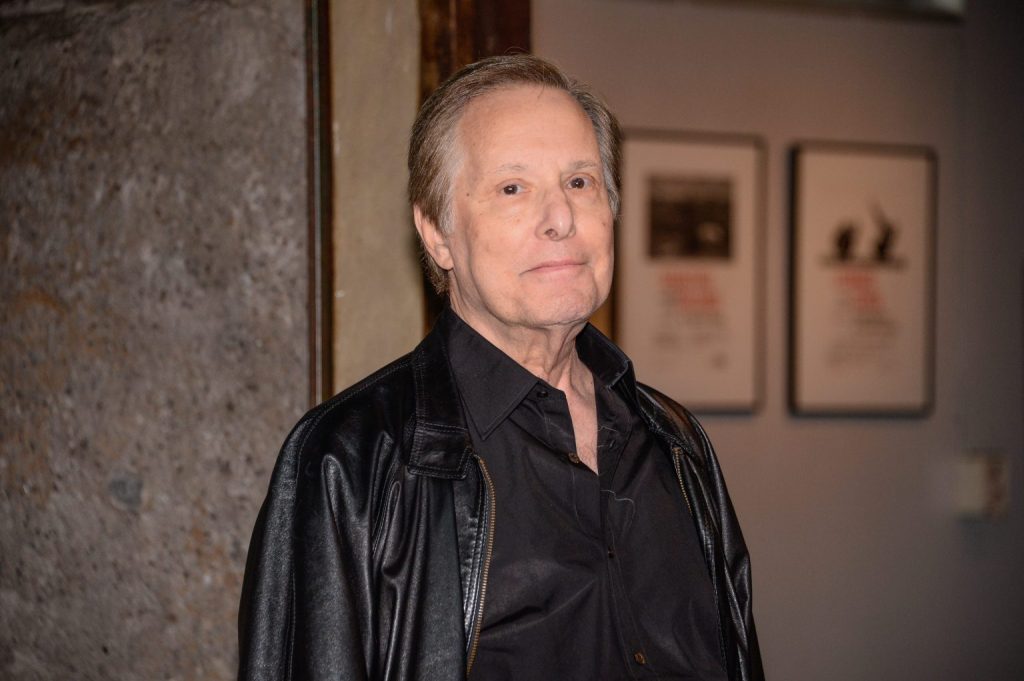
It’s hard to look at Friedkin, his high waist pants, buttoned down shirt (square glasses back in the day) and leather jacket and not think he is a self-styled anti-hero himself.
There’s some similarity between Friedkin and one of my other favourites, Werner Herzog, both coming from unusual backgrounds, with no formal education in making movies – then again, it’s not like there was a clear path to become a filmmaker while growing up in the 1940s and 1950s. They found their own vision of what films are and how viewers interact with them, inspired by the “masters” of their generation, as Friedkin refers to them – D.W. Griffiths, Wells, Hitchcock, Buster Keaton, Billy Wilder but also the French New Wave and Italian Neorealism. Interestingly, it was the European films that stood out first, with their reinterpretation of what filmmaking could be a more indelible lure for a young director.
Friedkin is ultimately a more conventional, old-school man of cinema, coming from the United States and working his way into the studio era of filmmaking, with productions that have significantly more of a mainstream appeal than Herzog’s (of the 70s and 80s). He is closer to his New Hollywood counterparts, who flourished at a time of artistic freedom and renewal, changing the rhythm and tone of American filmmaking.
the macho man
“If I do take two on something, it means a light fell in the shot or somebody had a heart attack and died. If they just had a heart attack, I wouldn’t cut, but if they died or something, you’d be forced to cut and get rid of the body. That’s my view of filmmaking, spontaneity is the thing that’s of most interest to me”.
Listening to Friedkin’s stories about filmmaking, a lot of it sounds like a cowboy sitting in a director’s chair. While no tragedies occurred during the shooting of his movies, there is an obvious danger to many of the experiences in the quest for accomplishing “a vision”. It is all Fitzcarraldo-esque, like moving a boat over a steep hill in the rainforest, whether it manifests itself almost literally as it does in Sorcerer, where a lot of the shoot and particularly the seminal bridge crossing scene were fraught with danger, or whether we’re talking about shooting car chases through the city without permits, as was the case in The French Connection.

It was all more informal and wild “back in the day”, which fed into the ego of these greater-than-life men who took big chances not only with their careers, but those of their collaborators. The stuff that happened on the set of The Exorcist is infamous: Friedkin used freezer coolers to get the esthetic of the exorcism shots, making the actors and young Linda Blair in particular act through difficult conditions; he slapped/punched William O’Malley to get a proper reaction shot; he fired blanks to shock Jason Miller without prior notice. Coming off the success of The French Connection, Friedkin indulged in his authority as a director and was difficult to work with on The Exorcist (and things stayed difficult for Sorcerer as well). The end result is admirable and unique, but I can understand those questioning the methods.
How would things be different today? Friedkin readily admitted he would not take the same chances he took back in the 1970s, a time where he felt “bulletproof” but came away unharmed only through the “grace of the God”. The standard for what is acceptable has also been upped considerably, making life difficult for those who do not respect both above and below the line talent. Still, this begs the bigger question, to which degree is risk inherent to filmmaking, to art, whether we’re talking about actual danger (probably not inherent) or that of self-expression (more inherent)? The only thing I can say for sure is that risk makes for great anecdotes.
I find it hard not to be swayed by risk-takers, being risk-averse myself. What matters more than anything though, is believing there’s a reasoned approach to it – and I emphasize believing because it may or may not have been the case as events unfolded, but proved so by the end result. Pretty much what The Caine Mutiny Court-Martial asks of us as well.
What’s interesting to note is that in spite of Friedkin’s bravura, he’s always emphasized the collective effort required to make movies, the lack of an objective truth when it comes down to evaluating what works and what doesn’t: had the original cut of The Exorcist included the material that was added in its 2000 re-release at the insistence of writer-producer William Blatty (including the infamous spider-walk scene), would it have been less successful or inferior to Friedkin’s vision of it? Probably not.
style
“Where you put the camera is who you are”.
We have grown accustomed to recognizing directors with very distinct visual styles. You’ve probably just read these words and are thinking “ah, yes, Wes Anderson”. It’s the overtness that gets to us first and I’ll readily admit I am no scholar of film and doubt I’d be able to identify a director by watching five minutes of a film I didn’t know. We are susceptible to aesthetic idiosyncrasies – the more distinctive, the easier we remember. I very much like Wes Anderson, but I don’t think there’s room for two Wes Andersons – which is what a lot of the internet discourse (and film discourse) looks like.

Friedkin’s movies of the 70s and 80s are realistic, often with a documentarian flair, hand held shots, few cuts, spontaneity, grit. Little to no moral satisfaction. But I would be hard-pressed to say his visual style stood out today. I think it is characters and subject matter that give his best movies a personal style that’s more readily identifiable. Maybe that’s part of the trade-off for being an instinctual director who never worked with storyboards. It is what I’ve drawn on after watching most of his movies – but I’m pretty sure the likes of Spielberg, Fincher, Tarantino and even Kurosawa drew more, as they all claimed to have been influenced by Friedkin’s work (in particular The French Connection or Sorcerer).
There’s also an added factor that seemed to follow Friedkin around at his peak – controversy. Not only as to his methods, but also regarding the content and representation in his movies. The Exorcist, naturally, drew a lot of ire and viewing restrictions around the world. Cruising fared probably worse: its aggressive depiction of the hardcore gay clubs and equally dark characters were criticized by the LGBT community and came off no better with critics (it was nominated for the Golden Raspberry as well). Seeing both today, it’s hard to see them as controversial – Cruising, in particular, was a positive surprise and not excessive compared to similar genre movies. Nor does the then-fear of it portraying gay men as more prone to aggression play like that today, though the early 80s were a very different time regarding both prejudice and hate-crimes.
I think style and identity are byproducts of being consistent. In this case, consistently doing movies you believe in – something Friedkin advocated as the number one rule for a filmmaker, with the caveat of “unless you’re starving, then just do anything”. This is what connects the four movies he did during the 70s and 80s which are most closely linked with the idea of a “Friedkin film”. To which I would add that the sparse use of music throughout his movies is also an interesting feature, emphasizing its power when it is relied upon – whether we’re talking about the theme from The Exorcist and its subdued score, Tangerine Dream’s electro-nightmares in Sorcerer or Wang-Chung’s quintessential 80s hit for To Live and Die in L.A.
veering towards a conclusion
“I’ve never made a film for myself. I’ve always thought: how are the audience going to react to this? I think “how can I make a film so that the audience will respond to it and not be bored?”
(guess I should’ve had the same thought as I started writing this)
In the late nineties something unusual happened – Friedkin directed his first opera, with no experience at all in the field, and his success was such that he went on to direct another fourteen (+?) operas until the end of his life, including a 2023 production of Aida in Torino, Italy. I think this is a beautiful commentary on how most of art is connected and on how the limits we see are often the ones we impose upon ourselves. To be fair, though, Friedkin was always a serious lover of music and paintings, something that he’s admittedly drawn inspiration from throughout his work.
The few movies he shot in the last two decades or so have been some of the bleakest of his career and they all had something special about them – Bug (2006) was a mind-bending venture into paranoia-by-contagion and featured Michael Shannon for the first time in a leading role, something that Friedkin had to fight on with the producers; like his next film, Killer Joe (2011), it was written by Tracy Letts, who went on to win a Pulitzer for the play August Osage County. And The Caine Mutiny Court Martial (2023) closed a circle that, I’m sure, will be spinning in viewers’ minds for many years to come.
There is so much to be gained from discovering artists we resonate with. Unlike other arts, the film business is unforgiving with its auteurs – many of the classics that have changed cinema fare differently in the eyes of a modern audience. Things that were original once now seem dated or have been superseded by executions that are more visually compelling. Themes that struck a chord can turn sour or crass. Cinema is best experienced moving forwards, not backwards, but that’s almost impossible to achieve.
Upon Friedkin’s passing, I came across an obituary by James Gray, director of some special films in Ad Astra and The Lost City of Z. He is one of the many influenced by both the works and the man. A paragraph stuck with me:
“The last time I saw him was a few months ago for dinner, at his and Sherry’s beautiful home. It was a characteristically lovely evening. But maybe I sensed unconsciously that I might not see him again. At some point during dessert, I blurted out an embarrassingly direct “I love you.” He looked at me for a moment, and I thought I might get a sarcastic joke in response. Instead, he touched my hand and replied, “I love you too, James.””
I will sign off on Friedkin’s most popular film you never knew he made. I hope you’ll feel it’s all been worth it.
Reviews:
Prologue: To Live and Die in L.A.
Week1: The French Connection, The Exorcist, Sorcerer, Cruising, The Caine Mutiny Court Martial
Week 2: Bug, Killer Joe, The Boys in the Band, The People vs. Paul Crump, Rules of Engagement
Week 3: Rampage, Blue Chips, The Night They Raided Minskey’s, The Brink’s Job, The Hunted
Week 4: Leap of Faith, Conversation with Fritz Lang, Friedkin Uncut, The Birthday Party, Sorcerer’s: A Conversation
 tributary stu
2 responses to “William Friedkin, An Exploration”
[…] The first of three weeks of William Friedkin. Do remember to check out my exploration of the man himself. […]
LikeLike
[…] The second of three weeks of William Friedkin. Do remember to check out my exploration of the man himself. […]
LikeLike